- Статьи
- Society
- The Brainchild of the Thaw that changed the face of Moscow: 65 years since the opening of the State Kremlin Palace

The Brainchild of the Thaw that changed the face of Moscow: 65 years since the opening of the State Kremlin Palace

Exactly 65 years ago, on October 17, 1961, the State Kremlin Palace opened, which has become one of the most recognizable symbols of Moscow. It became not only an architectural response to the challenges of the time, but also a space where politics and culture intertwined: the most important party congresses took place here, the voices of world stars sounded, and the lights of the country's main Christmas tree were lit every year. About the history of the Kremlin Palace — in the material of Izvestia.
Why did Nikita Khrushchev decide to build a new palace in the Kremlin
By the end of the 1950s, the state apparatus of the USSR had grown noticeably, and the former venues of party congresses - the Sverdlovsk Hall of the Senate Palace, the Andreevsky and Alexander Halls of the Grand Kremlin Palace, the Pillared Hall of the House of Unions — could no longer cope with their scale. A separate, much more spacious building was needed.
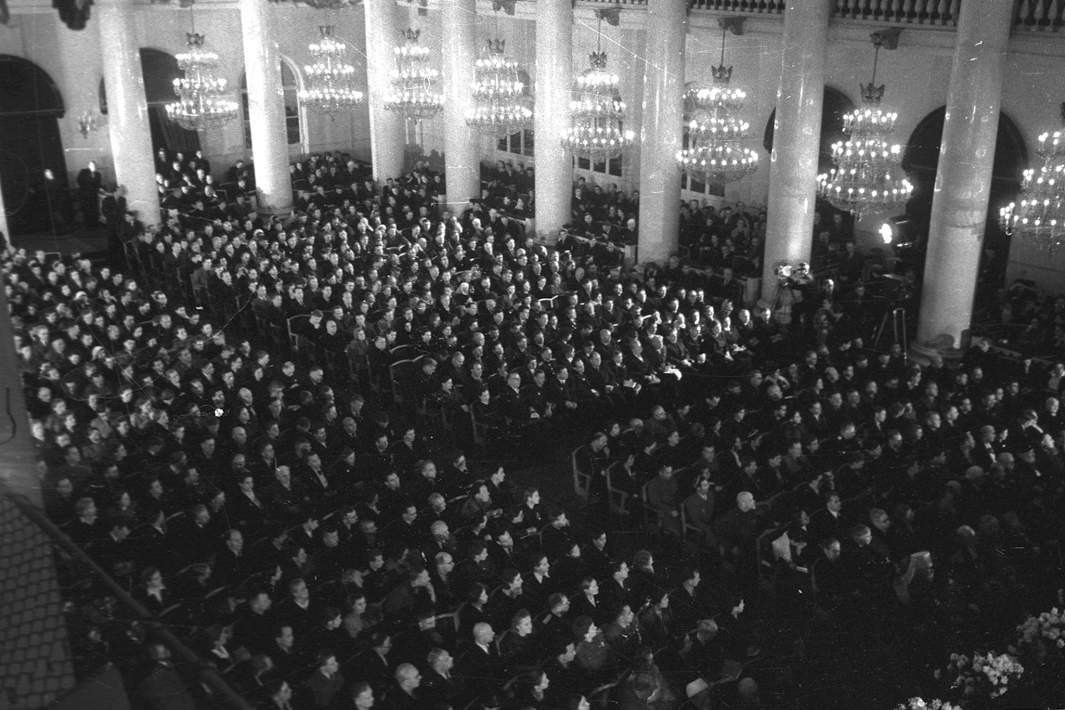
Column Hall of the House of Unions
In addition, after the XX Congress of the CPSU (1956), at which Khrushchev exposed the cult of Stalin's personality, it was important for him to show a change of course. In his perception, the Kremlin was too strongly associated with the Stalinist era. The new glass and concrete palace was supposed to be an architectural metaphor for the thawing era of progress, modernity, and a break with the past.
Back in the 1930s, a project was created for the Palace of Soviets, a grandiose structure for holding sessions of the Supreme Soviet of the USSR, but it was not possible to implement it.
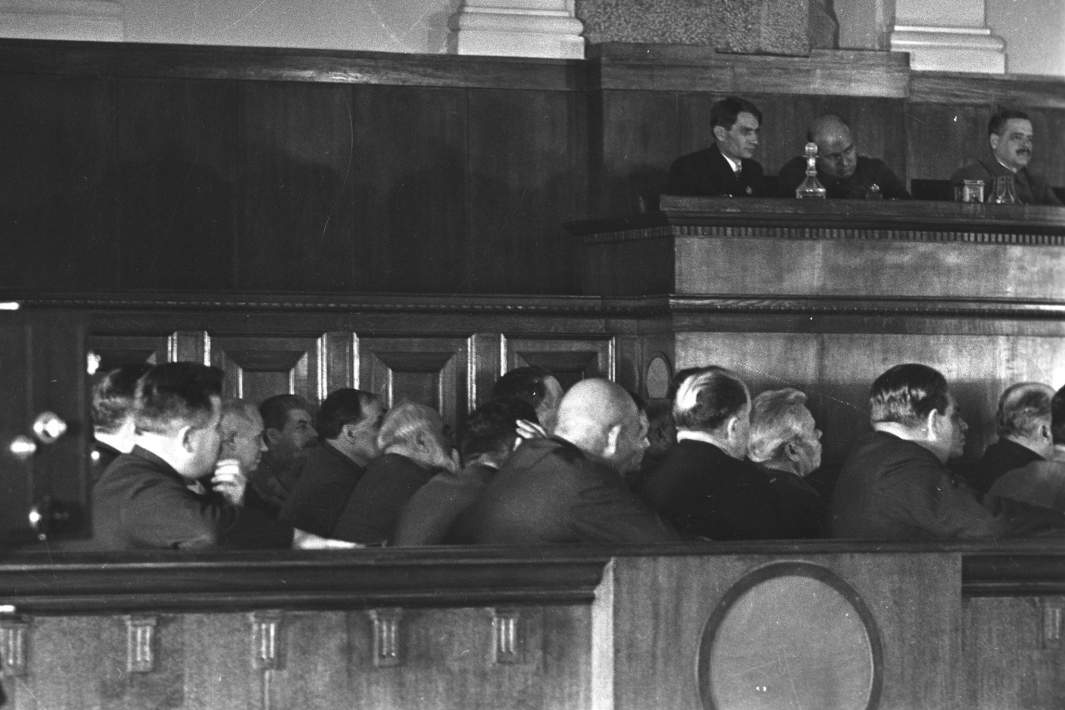
Session of the Supreme Soviet of the USSR
In Khrushchev's time, this idea was finally abandoned.: it corresponded neither to the new architectural trends (the course towards functionalism, the rejection of architectural excesses), nor to the modern political course. The construction of the Congress Palace in the Kremlin has become a kind of replacement — the embodiment of the same idea of a large public space for congresses, but in a different format.
— The design and implementation of the Palace of Soviets were stopped by the outbreak of the Great Patriotic War, and then, after Stalin's death, they decided to implement the project in a different form in Ramenki, on the axis of the Main Building of Moscow State University. It was already the Palace of Congresses in the spirit of the new architecture. As a result, after Khrushchev came to power, the idea of creating a government center in Ramenki completely disappeared and a project arose to place the Palace of Congresses in the Kremlin, historian Denis Romodin told Izvestia.

How the project was chosen: architect Mikhail Posokhin
Work on the project began with a closed competition. In 1959, after Nikita Khrushchev personally approved the construction in the Kremlin, the selection was announced. Out of about 12 options, the commission chose a project led by Mikhail Posokhin. At that time, he already held the post of chief architect of Moscow, and this, of course, played a role: he had experience solving complex urban planning tasks.
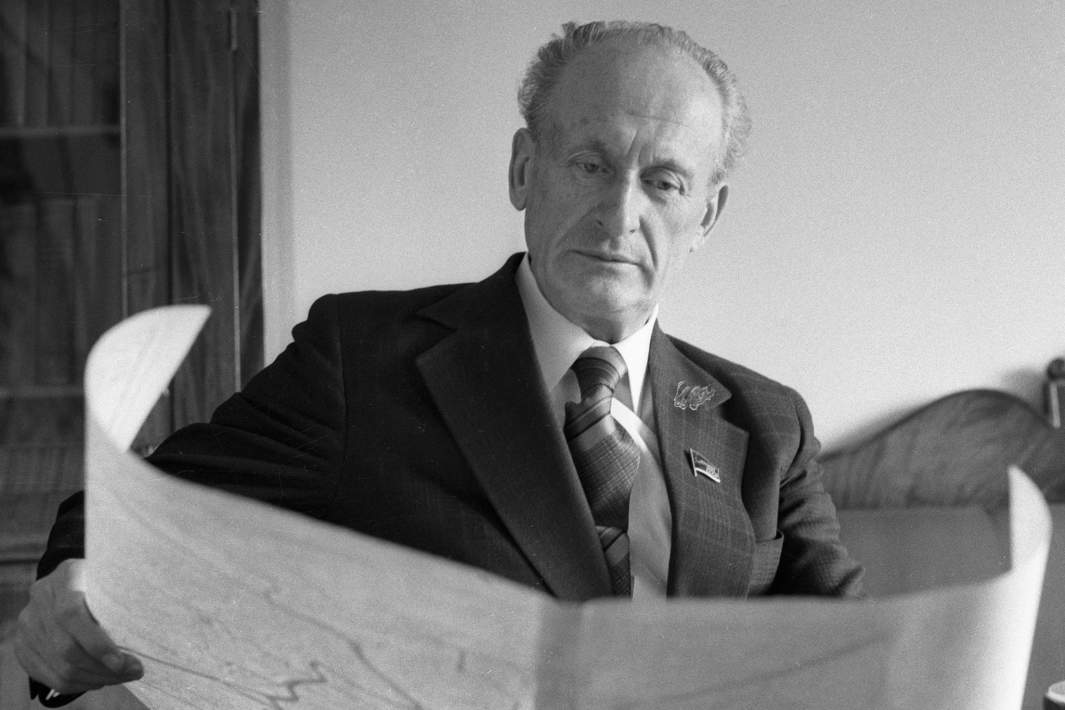
People's Architect of the USSR Mikhail Posokhin
— It was a closed competition, and due to the fact that Posokhin had already gained credibility and his new style was sympathetic to Khrushchev, his team most likely won. In addition, Posokhin assembled an experienced team of architects who were supposed to create a project in the spirit of the new age in the historic Kremlin," said Denis Romodin.
Then the active revision of the project began. Posokhin did not work alone: he headed the design team, and separate groups designed different parts of the building. The meeting room was designed by Evgeny Stamo's team, Pavel Shteller's group worked on the lobby, and Ashot Mndoyants designed the facades.
According to a common version, politics and foreign experience intervened in the history of construction. During a visit to China in 1959, Khrushchev visited the Beijing People's Assembly House and was impressed by its scale. After that, he allegedly ordered an increase in the Moscow project: initially, the hall was planned for 4 thousand seats, but it was made for 6 thousand. Moreover, on his instructions, a banquet hall was added, and they decided to place it directly above the auditorium.
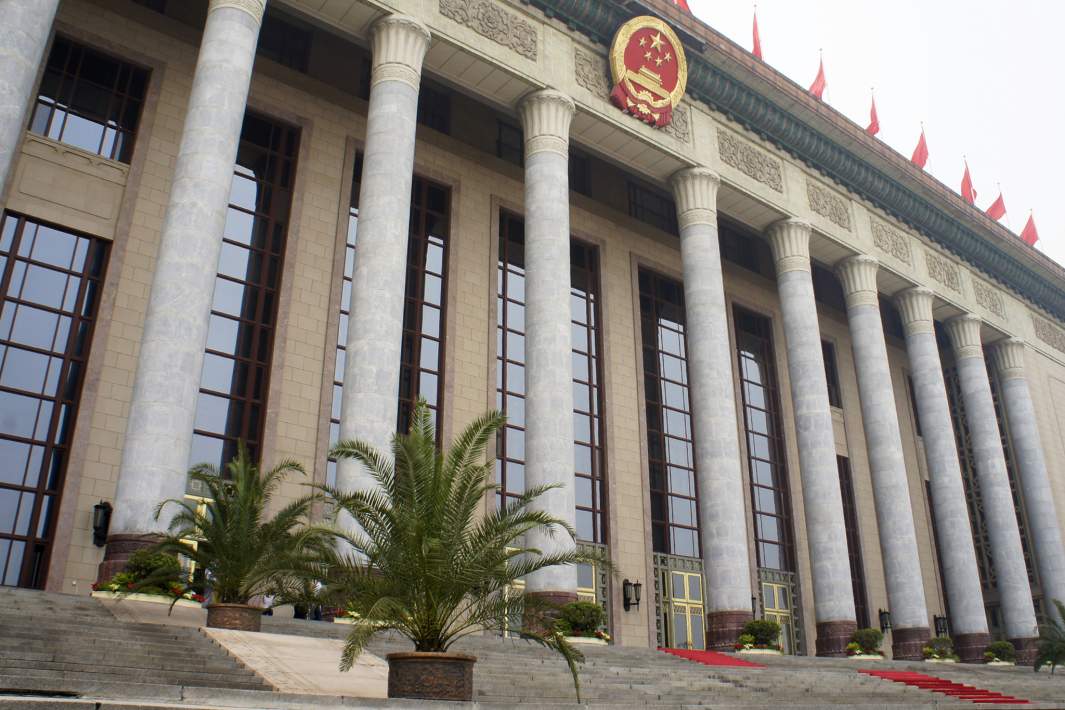
The House of the People's Assemblies (House of the National People's Congress) is the building of the Chinese Parliament on the west side of Tiananmen Square in Beijing.
But some researchers consider this version to be a beautiful legend rather than a documented fact.
— This is just a legend — it has not been documented in any way, as well as by the authors of the Palace of Congresses. But it has already been established in many ways. <...> Although the building there is fundamentally different in style and structure, — Denis Romodin explained.
At the same time, some members of Posokhin's team actually traveled to Germany, the USA and China to learn from the experience of their foreign colleagues. We also studied the interior of the UN meeting room in New York.
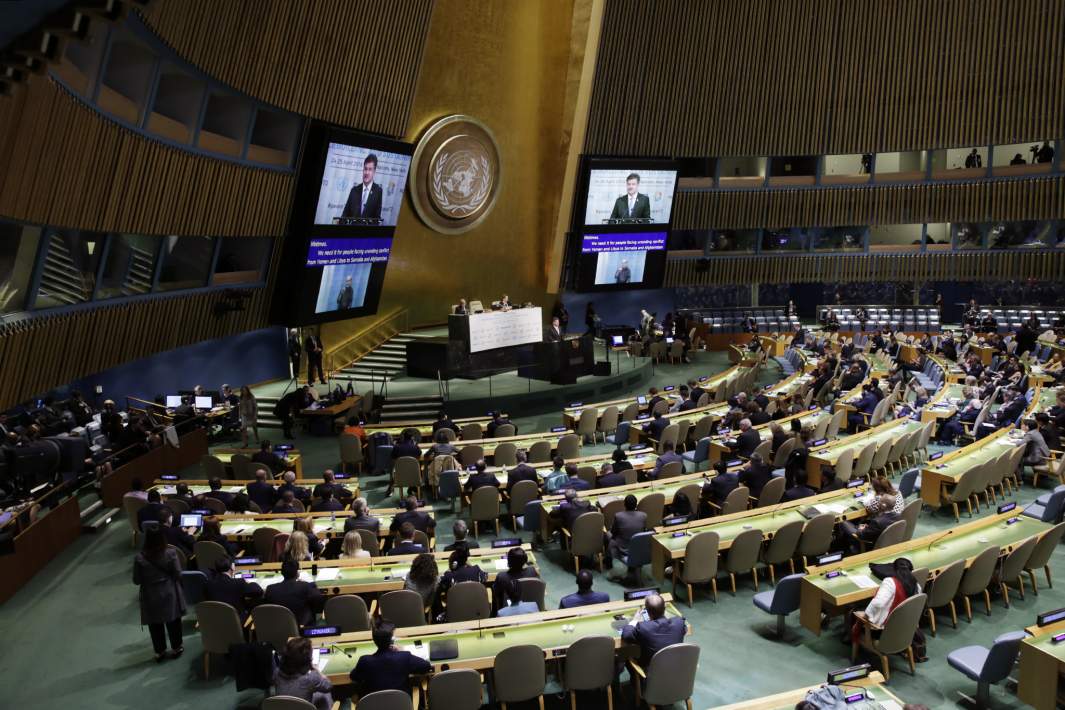
The UN Meeting Room in New York
The result was a project that became a vivid symbol of architecture of the Thaw era — with its emphasis on functionalism, pure geometric shapes and the rejection of architectural excesses in the spirit of the Stalinist Empire. In 1962, the team of authors led by Posokhin received the Lenin Prize for its implementation.
16 months on the construction site: how a huge building was erected
Khrushchev wanted to hand over the palace by the XXII Congress of the CPSU in October 1961. He personally supervised the construction, and Alexey Kosygin (then Deputy Chairman of the Council of Ministers and Chairman of Gosplan) was also involved in the project. Such a high rate forced everyone to work as intensively as possible.
The construction was carried out at a rapid pace: the crews worked in three shifts. Materials were delivered from all over the Union — they did not wait for local production, so as not to waste time. While the frame was being built on some sites, others were already engaged in finishing or installing engineering systems. This greatly reduced the total construction time.
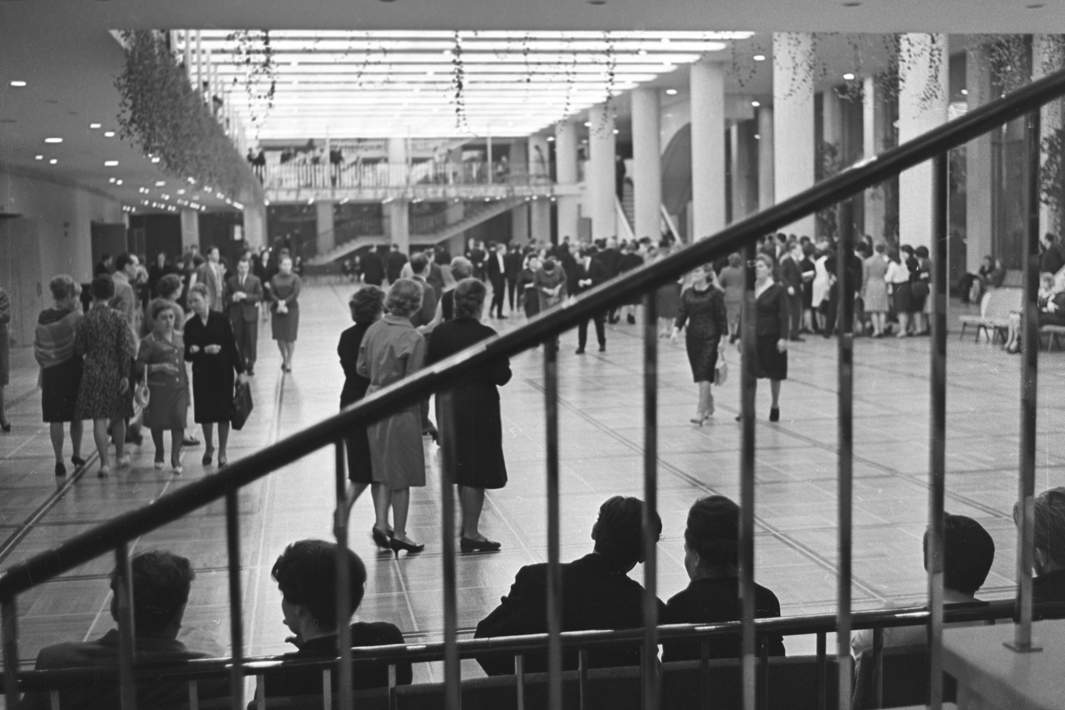
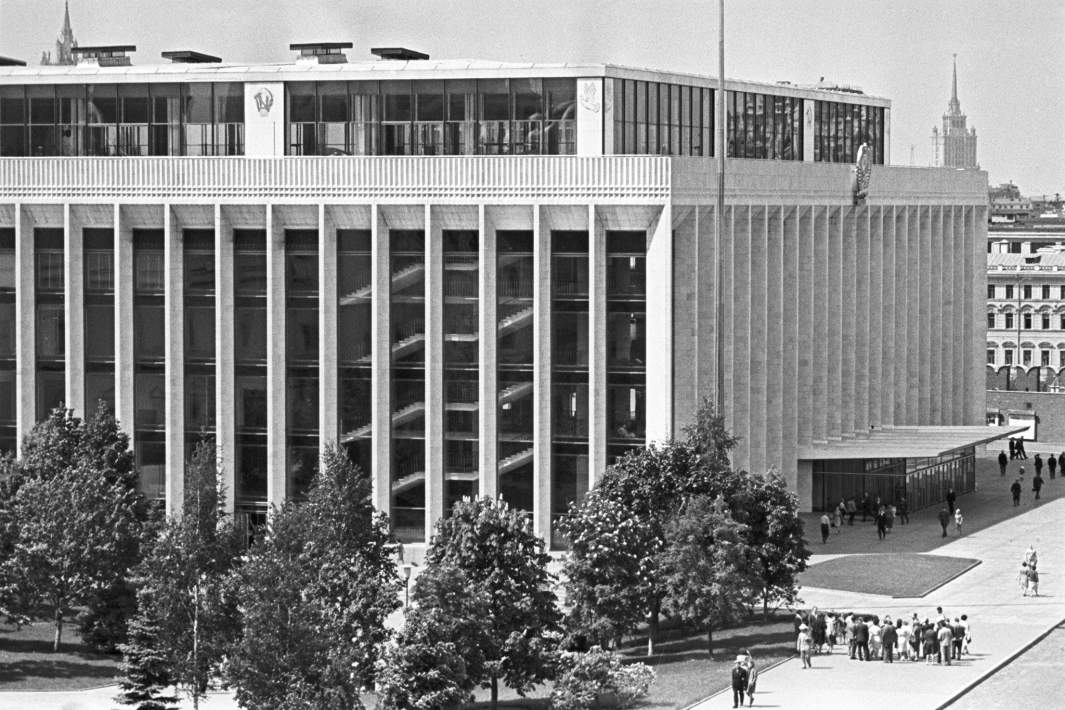
To prevent the huge building from dominating the historical ensemble of the Kremlin, the architects partially removed it underground. The lower level (lobby, technical rooms, part of the halls) was lowered by about 15-17 m — almost to the height of a five-story building. The result was an "architectural iceberg" effect: two thirds of the volume disappeared underground, and only one third remained on the surface. This made it possible to accommodate all 800 rooms without expanding the building area on the surface.
"The original project involved building a higher building, but then it would have stood out too much from the historical buildings of the Kremlin, so it was decided to make a deeper excavation and deepen the building into the ground, which is why it is usually partially sunk into the ground, partly on the surface," historian Alexander Gorsky told Izvestia..
Several buildings were dismantled at the construction site, including the old Armory building. This freed up the site, but it cost the loss of historical sites.
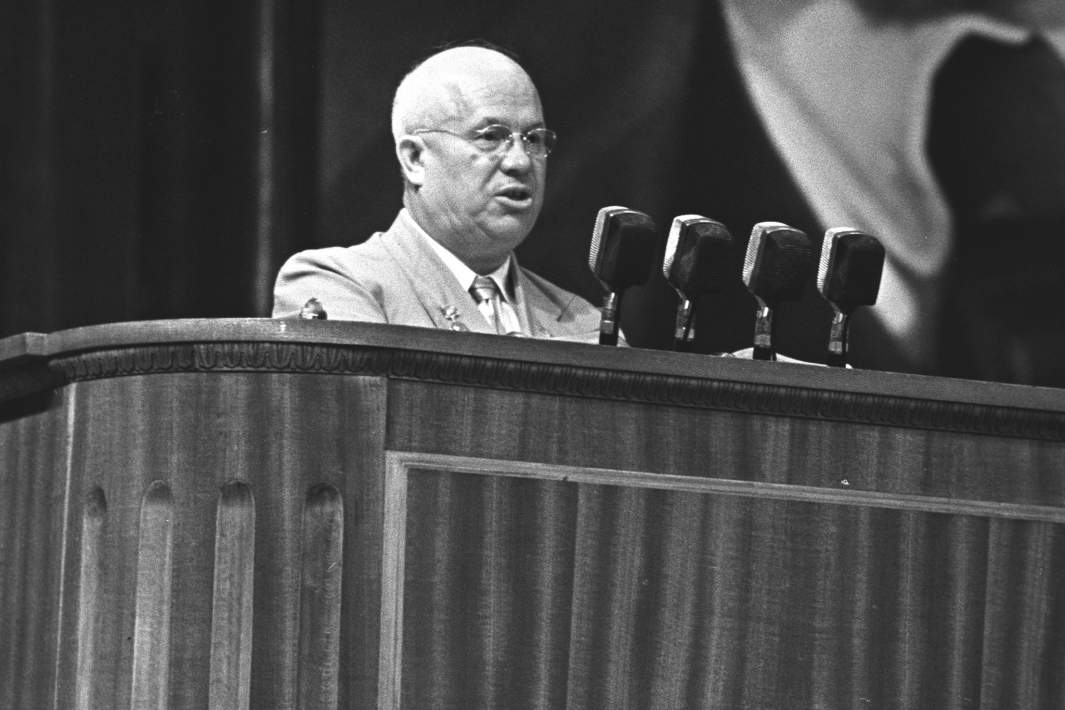
Nikita Khrushchev, First Secretary of the Central Committee of the CPSU
According to some sources, several non-standard tests were carried out before the building was put into operation. After the construction of the main floors, about 15 thousand soldiers marched through the floors. The test revealed weaknesses that were promptly eliminated. Also, before the final delivery, another check was arranged: the Bolshoi Theater troupe and 600 pairs of Komsomol members danced in the hall. Only after that the building was declared ready.
At a banquet in honor of the completion of construction, Posokhin called the Palace of Congresses "the brainchild of the thaw," and Nikita Khrushchev was the first architect of this project.

October 17th, 1961: how was the opening of the Palace of Congresses
The opening on October 17, 1961 turned out to be large-scale and very symbolic. The hall, designed for 6 thousand people, was full, among the guests there were 4.5 thousand delegates plus foreign guests.
The program included more than just party meetings. A festive concert was organized for the guests. It includes a fragment of the ballet "Swan Lake" and performances by artists of various genres.
How the venue for party congresses turned into a concert stage
The architects, led by Mikhail Posokhin, created a space that could work both for large-scale gatherings and for spectacular events. The building had a huge main hall and other rooms, such as small halls, foyers, and technical areas, which allowed for flexible changes in the event profile later.
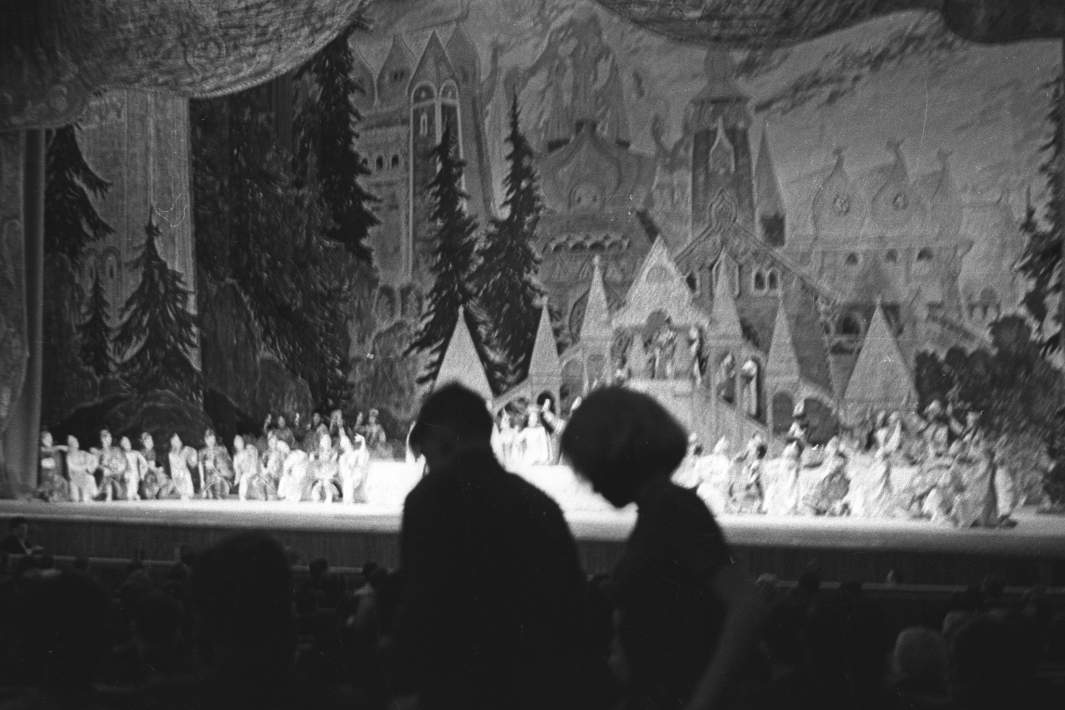
Already in the first years after the opening, the main hall was put into operation by the Bolshoi Theater: ballet and opera productions were regularly staged there. So the political platform quickly gained a serious cultural status. Over time, not only classical bands, but also pop performers and foreign stars began to perform on this stage.
Why was the building renamed the State Kremlin Palace
The building was renamed in 1992 for a reason — it was a sign of how radically the country had changed. The former name "Kremlin Palace of Congresses" tied the space to a specific function: party events, primarily congresses of the CPSU, were held on the site. But with the cessation of the existence of the party, it lost its former meaning.
— With the end of the Soviet Union and the cessation of congresses, as well as the decommunization campaign, it was decided to rename the palace. They took a simple and understandable name, because there was already a Grand Kremlin Palace, so they made the State Kremlin," Denis Romodin said.
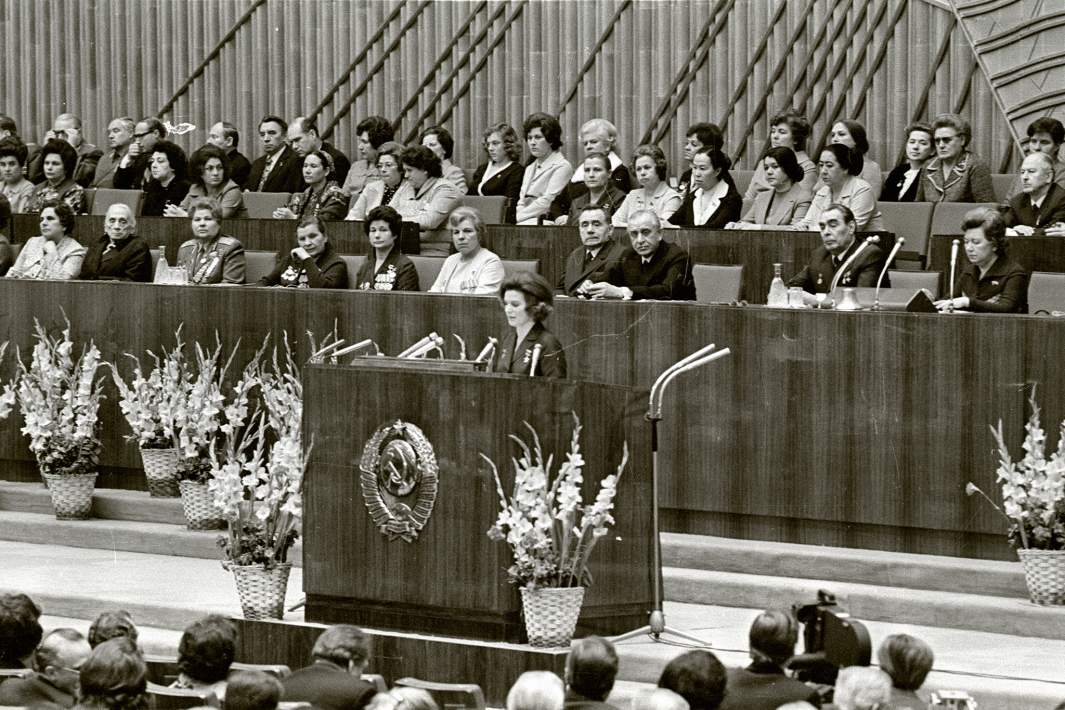
The new name recorded several important shifts at once. Firstly, the emphasis has shifted from party to national. Secondly, it consolidated the already established cultural function of the building. By 1992, the palace had long ceased to be an exclusively political space: performances, concerts, New Year's trees and solemn ceremonies were regularly held within its walls.
An additional factor was the administrative change: the palace was taken over by the Office of the President of the Russian Federation, and the name had to correspond to its new status.
What famous performances and concerts took place in the Kremlin Palace
The State Kremlin Palace became a venue where the audience could see both academic ballet and theater productions, as well as concerts by world stars.
The ballet "Swan Lake" has become one of the key ones in the history of the palace. This performance began to be shown on the stage of the Palace of Congresses immediately after its opening in 1961. Later, in 1990, the palace had its own theater, the Kremlin Ballet. At first it was called the "Ballet Theater of the Kremlin Palace of Congresses", later it was renamed. His repertoire includes "Don Quixote", "The Nutcracker", "La Bayadere", "Giselle", "Vain Precaution", "The Scarlet Flower" and other productions.
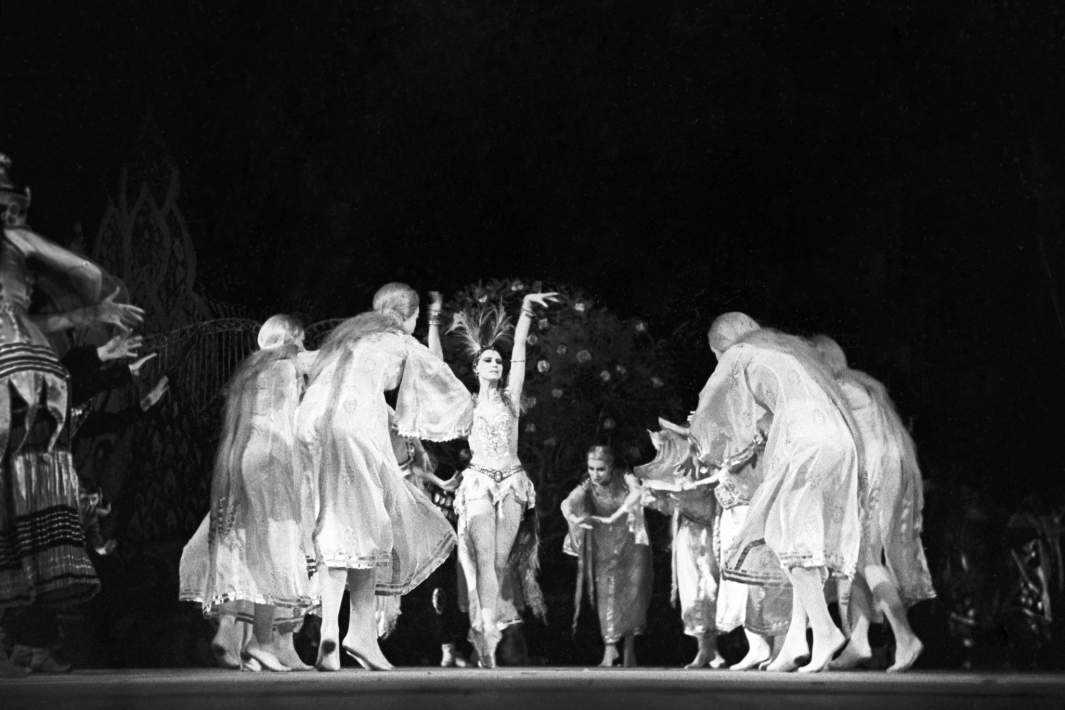
People's Artist of the USSR Maya Plisetskaya at the Kremlin Palace of Congresses
Famous choreographers worked on the original works for the stage of the State Kremlin Palace. Yuri Grigorovich, Vladimir Vasiliev and Andrey Petrov created their own versions of classic plots here.
Many legendary artists performed on the stage of the palace. Among the opera stars are Luciano Pavarotti, Jose Carreras, Montserrat Caballe, Galina Vishnevskaya, Elena Obraztsova, Bela Rudenko; among the ballet masters are Maya Plisetskaya, Natalia Bessmertnova, Maris Liepa. It also hosted concerts by foreign musicians: Elton John, Sting, Tina Turner, Joe Cocker, Tom Jones, Charles Aznavour, Mireille Mathieu, Whitney Houston and many others.
Russian bands have performed on this stage more than once.: The State Academic Folk Dance Ensemble under the direction of Igor Moiseev, the Song and Dance Ensemble of the Russian Army named after A.V. Alexandrov, the State Academic Russian Folk Choir named after M.E. Pyatnitsky. Pop performers include Mikhail Shufutinsky, Igor Krutoy, Polina Gagarina, Lev Leshchenko, Denis Maidanov, SHAMAN, Larisa Dolina.
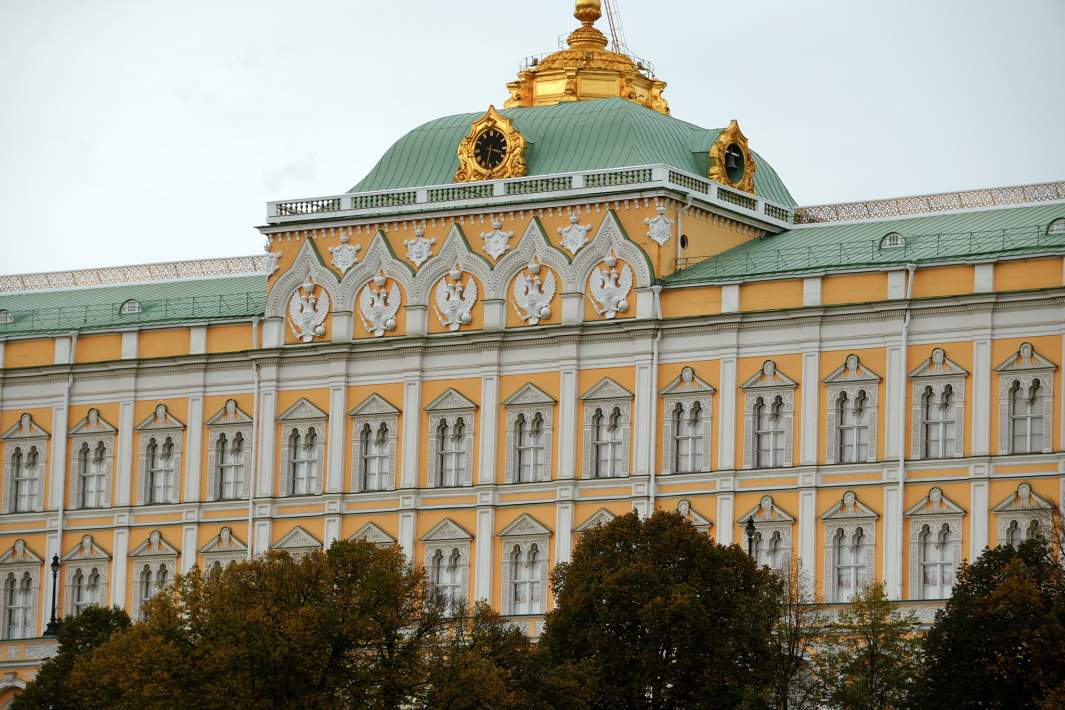
The Kremlin Palace also hosts the country's main Christmas tree every year.
In addition to cultural events, the palace also served as a venue for socio-political events: for example, two inaugurations of Boris Yeltsin took place here — in 1991 and 1996.
Переведено сервисом «Яндекс Переводчик»
