
Interest-based approach: small banks want to abandon social contributions

Residents of remote areas may be left without the opportunity to open social accounts and deposits through regional banks. These are the maximum-rate products for social support recipients. Starting in 2027, all credit institutions must offer them, but the Association of Russian Banks requests that small players with a basic license be exempted from this obligation. To launch new products, each market participant will have to spend up to 10 million rubles on setting up automated systems and integrating with Public Services, and demand in some regions may be extremely low, ARB noted in a letter to the State Duma. But if the authorities exclude small banks from the law, the availability of deposits for the poor will decrease, experts warn. How to solve the problem without harming customers is in the Izvestia article.
Small banks don't want to launch social deposits
Russians have been able to open social accounts and deposits since July 1, 2025 — now they can be issued in systemically important banks (for example, in Sberbank, Gazprombank or PSB). From the beginning of 2027, all other credit institutions should join the program.

However, small players believe that the cost of launching new products may be too high compared to the possible demand. Therefore, the Association of Russian Banks (ARB) requests that regional credit organizations with a basic license be exempted from the obligation to provide such products. ARB sent a letter with this request to the Chairman of the State Duma Vyacheslav Volodin on October 20.
The social contribution allows recipients of state support to place up to 50 thousand rubles for a period of up to a year on favorable terms. The rate should coincide with the maximum percentage that the credit institution offers for deposits of individuals for up to 12 months, explained Vasily Kutyin, director of the analytical department of Ingosstrakh Bank.
The social account is designed for everyday operations. It does not have a limit on the amount, interest is charged on the balance, which should not be less than half of the current key rate (currently it is 7%), and the money can be used for settlements and cash withdrawals. The opening and maintenance of both products should be free, and transfer fees are limited.

Social accounts and deposits are available to adult citizens who receive social support from the state, for example, a social supplement to a pension or a single benefit. You can check whether a person is entitled to such a benefit in the "Social Contribution" section on the Gosuslugi website. The system itself will make a request to the relevant authorities, and if the person is in the registry, the open button will become active.

To offer such services, banks need to set up automated systems and ensure interaction with Public Services. According to ARB estimates, the cost of this can reach 10 million rubles. However, this amount probably reflects the upper limit of costs, Vasily Kutyin believes. Most credit institutions already have the necessary infrastructure.
Depending on the state of the bank's IT systems, the actual cost of connecting the new product will be 1-4 million rubles, estimated Natalia Milchakova, financial analyst at Freedom Global. However, for a small player, even such investments may not pay off if few customers use social accounts and deposits.

Izvestia sent inquiries to the ARB and the Central Bank.
Who may encounter a problem with the availability of the service
If small banks are relieved of this duty, social accounts and deposits themselves will not disappear: they will still be able to be offered by other credit institutions. However, for residents of small towns, the availability of a service in a large bank does not always mean that it will be convenient to use it.

First of all, difficulties may arise for those who find it difficult to get to offices or use remote services on their own, Natalia Milchakova noted. This applies to the elderly, people with limited mobility, and residents of remote areas where large bank branches may not be nearby. It is difficult to estimate the exact number of such people: we can talk about thousands or tens of thousands of people.

Regional banks often continue to operate where large credit institutions do not open branches. Therefore, the participation of small banks in servicing recipients of state support can be important even with a small number of clients, said Valery Tumin, a member of the expert council of the State Duma Committee on Economic Policy. In a village where the only ATM and office belong to a regional bank, the refusal of such organizations from the product actually deprives the resident of the opportunity to use it conveniently, Vasily Kutyin agreed.
At the same time, the demand for social accounts and deposits will vary depending on the region. In some cases, the needs of citizens can be covered by large banks through which payments from the budget pass, said Meri Valishvili, Associate Professor of the Department of State and Municipal Finance at Plekhanov Russian University of Economics. But this still does not solve the problem for residents of territories where there are no branches of these credit institutions.
How can the problem be solved?
One of the ways to eliminate difficulties is to create a single technical module for connecting social products so that small banks do not have to pay for all system configuration themselves. Such a mechanism could be developed by the Central Bank and relevant departments, Vasily Kutyin believes.
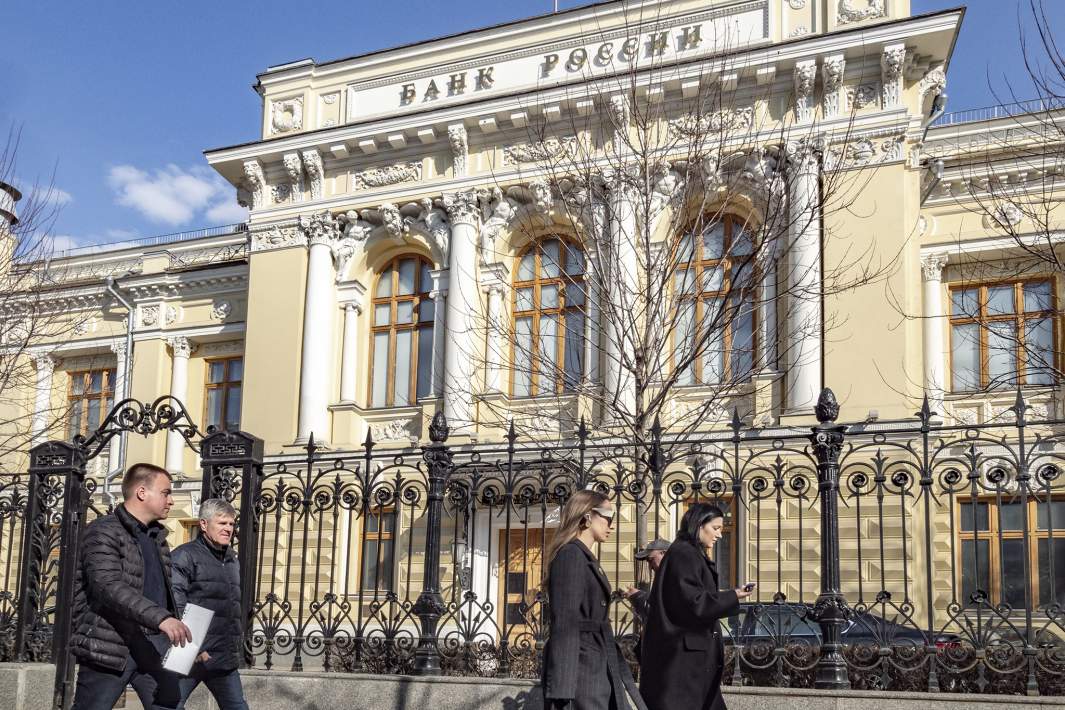
Another option is to arrange service through intermediaries. For example, a local bank or a multifunctional center could help citizens open social accounts in large credit institutions, Valery Tumin added. This would allow maintaining access to the service in localities where there are no branches of federal banks.
If necessary, the government could also partially compensate small credit institutions for the cost of connecting to the system, Natalia Milchakova believes.
No matter what decision the authorities make, people from remote regions should in any case not lose the opportunity to receive their banking products, experts stressed. At the same time, the most important thing is to preserve the ability to receive and withdraw money for those who find it difficult to use digital services or get to branches of large banks.
Переведено сервисом «Яндекс Переводчик»
