To share with the council: the gene of the "indestructible" sponge will help to start tissue regeneration in humans
- Статьи
- Science and technology
- To share with the council: the gene of the "indestructible" sponge will help to start tissue regeneration in humans


For the first time, Russian scientists have collected the genome of a marine sponge, an organism with a unique ability to fully regenerate. This species is able to recover even after disintegration into individual cells: they can re-unite and form an entire organism. The data obtained will help identify the genes responsible for these mechanisms. In the future, this may bring closer the development of medical technologies capable of triggering regenerative processes in human tissues. According to experts, such technologies are the future, but their practical application is still too far away, and regeneration can potentially lead to pathological processes.
Indestructible sponge
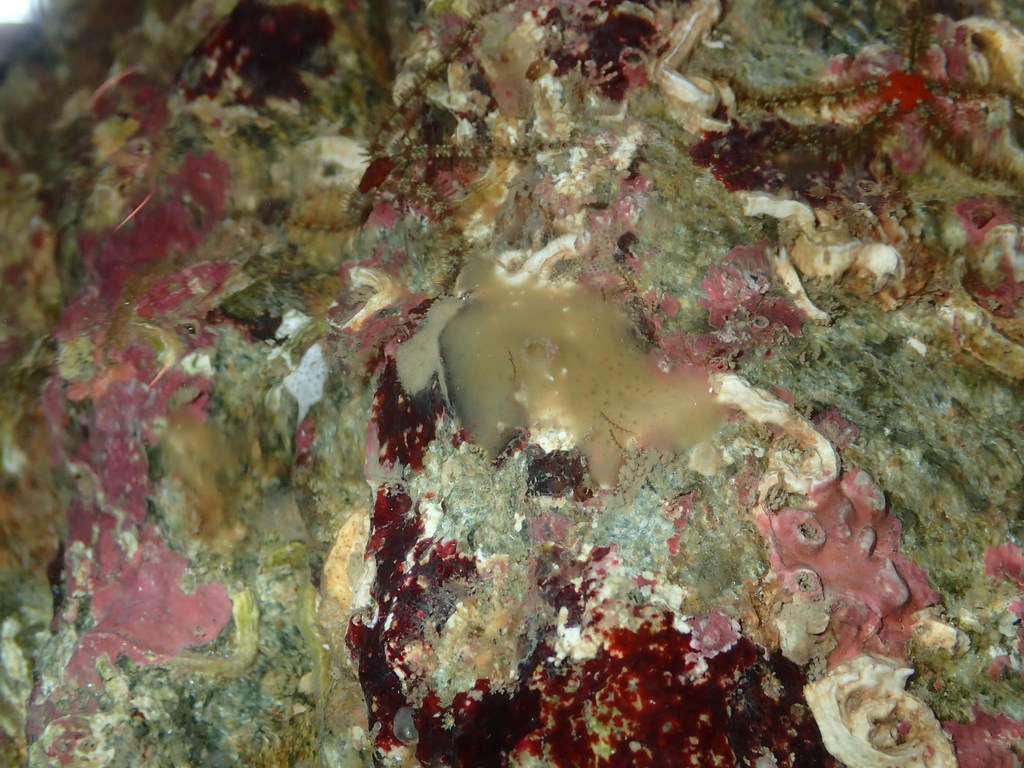
Scientists from Skoltech, the N.K. Koltsov Institute of Developmental Biology of the Russian Academy of Sciences, and their colleagues from Russian and foreign scientific centers have collected the genome of the marine sponge Halisarca dujardinii for the first time. This species is known for its unique ability to fully regenerate. DNA data is needed by specialists in order to find the genes responsible for the ability to recover, and in the future to learn how to trigger this mechanism for medical purposes.
— We are studying the sponge and its genome to understand exactly how its regeneration works. Which genes are involved in this, which of them are activated or, conversely, suppressed, and how this process is triggered. As soon as we find out, we can talk about transferring the acquired knowledge into practice, for example, into medicine. You can try to simulate a similar regeneration process in humans by starting or inactivating the necessary genes. In any case, we understand that without the complete genome of this sponge, all research in this area would have been impossible," said Ekaterina Khrameeva, associate professor at the Skoltech Center for Bio— and Medical Technologies, one of the authors of the study.
Genomic assembly is the process of reconstructing the complete DNA sequence of an organism from a variety of short fragments that are obtained during sequencing. The sequencer cannot read the whole chromosome from beginning to end, so the DNA is broken down into fragments, and the task of scientists is to put these fragments back together correctly.

The difficulty is that there are repetitive regions in the genome, which often leave the assembly fragmented. To solve this problem, the researchers used data on the three-dimensional packaging of chromosomes, which show which sections of DNA are in physical contact with each other in the cell nucleus. The final assembly has a length of about 226.5 million pairs of nucleotides and is organized into 21 chromosomes, which is confirmed by microscopy of dividing sponge cells. The key importance of the work is the creation of a high—quality reference genome for studying regeneration. Without a genome sequence, it is impossible to correctly map data on gene expression and three-dimensional DNA contacts.
— Sponges are one of the most ancient multicellular organisms, and studying how their cells reassemble into a single organism may provide clues to the origin of multicellularity. The resulting assembly serves as the basis for these studies: without it, it would be impossible to analyze which genes turn on and which new contacts in DNA appear during the regeneration process. The work is fundamental, but it is precisely such high—quality genomic assemblies that are the foundation without which subsequent breakthroughs in regenerative biology are impossible," Ekaterina Khrameeva emphasized.
Technology of the future
Such research is useful from many points of view, as the study of various organisms provides new ideas and methods for the production of medicines, obtaining the right substances and developing biotechnologies, says Mikhail Bolkov, a researcher at the Institute for the Study of Aging at the Russian Gerontological Research and Clinical Center at Pirogov University. However, according to him, the regeneration of human tissues is still too far away.
— Such technologies are the future. Of course, animal genes are not yet embedded in the genome of patients, but delivering copies of human genes to regulate certain proteins is already one of the medical strategies for certain diseases," the specialist said.
The assembly of the marine sponge genome is important primarily for fundamental science: the identification of similar mechanisms in one organism in the future may give an idea of whether their partial reproduction is possible in other biological systems. However, according to Maria Vedunova, director of the UNN Institute of Biology and Biomedicine, transferring such mechanisms directly to humans is extremely problematic. In marine sponges, cells have high plasticity and are able to easily switch from one type to another, which provides them with a unique ability to restore the body.

In contrast, human cells are strictly differentiated, and changing their "fate" without strict control can lead to pathological processes, including the development of oncological diseases. Therefore, as the expert emphasizes, the launch of similar regeneration mechanisms for medical purposes remains unlikely in the current understanding of biology and requires fundamentally different approaches.
— We always strive to find mechanisms useful for humans in other organisms, for example, in living beings with an extended lifespan. However, we are too far away from sponges in evolutionary terms," she said.
Nevertheless, the specialist is sure that the search for related genes, proteins with similar functions, and regeneration mechanisms should be continued, as such methods are the future.
Переведено сервисом «Яндекс Переводчик»
