Based on a certain purity: dangerous substances in the water will be detected using a smartphone
- Статьи
- Science and technology
- Based on a certain purity: dangerous substances in the water will be detected using a smartphone


Russian scientists have developed a way to search for harmful substances in water using a smartphone. To do this, a concentrate is obtained from a water sample using a special cartridge, and then colorimetry is used to determine the concentration of a substance by the color intensity of the solution using the device's camera. Now experts suggest searching in this way for exceeded levels of the chemical that is used to precipitate the suspension. However, in the future, the approach can be used to search for various impurities and pollutants, scientists told Izvestia.
How to determine water quality using a smartphone
Scientists at St. Petersburg State University have developed a method for analyzing the content of a chemical capable of harming humans in water. The proposed approach is based on a new generation of solvents and colorimetry, that is, determining the concentration of a substance by the intensity of the color of a liquid using a smartphone camera. This will replace the expensive, less accurate and toxic methods that exist now.
Water quality has a significant impact on the environment and human health, so there is a need to purify both wastewater and drinking water, scientists told Izvestia. One of the steps is the removal of undissolved suspended particles. For this purpose, special substances are used that combine small particles into larger ones, such as coagulants and flocculants.
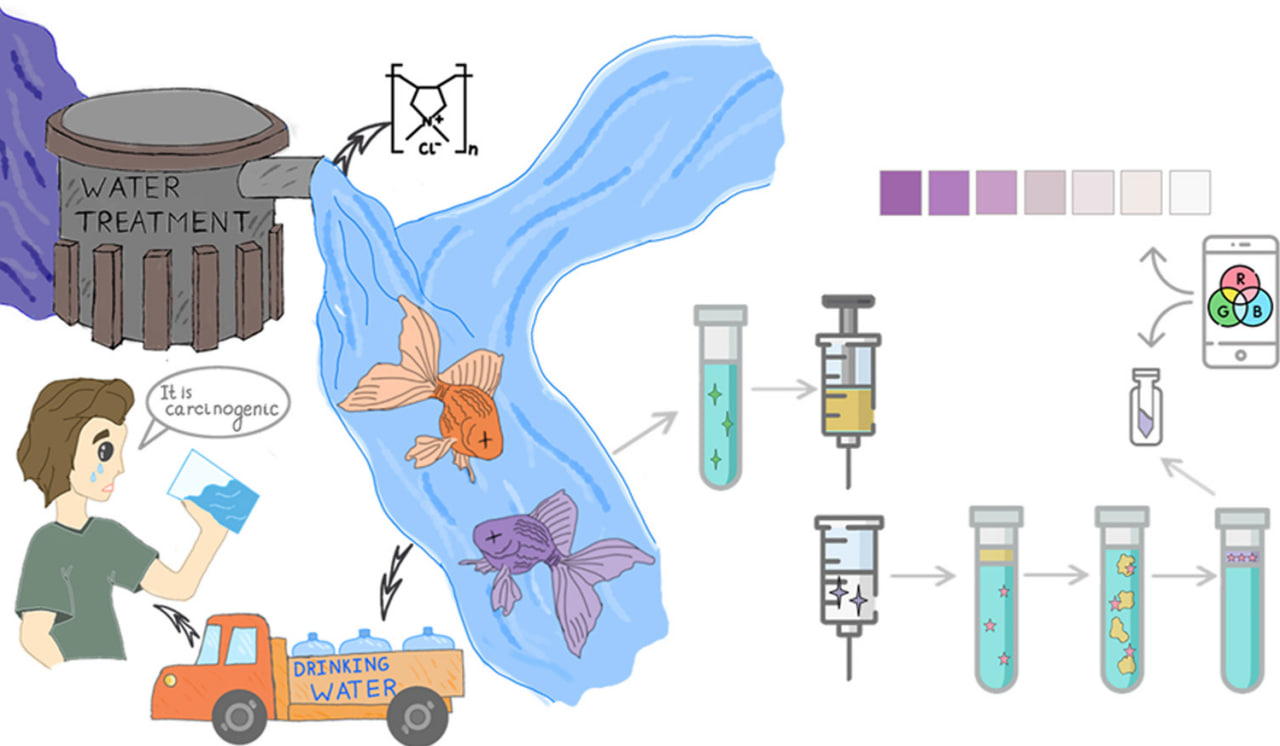
For example, a cationic polyelectrolyte of polydiallyldimethylammonium chloride, Polydadmach, is suitable for these purposes. Most of this compound is retained during filtration and does not pass through to the next stages of purification. However, in some situations, for example, when using concentrations above the norm, the flocculant may remain in the water, which can be dangerous for humans.
Polydadmach itself refers to substances that cause a low level of environmental concern, the scientists note. However, exceeding its concentrations during filtration can lead to the formation of by-products such as N-nitrosodimethylamine, which is considered a carcinogen. Therefore, it is important to analyze how successfully the water has been purified and how safe it is for ingestion.
Existing methods for determining its content do not have sufficiently low detection limits and therefore require the use of expensive laboratory equipment or toxic and expensive reagents. As explained by Irina Timofeeva, professor of the Department of Analytical Chemistry at St. Petersburg State University, when monitoring water quality, it is important to receive information quickly, being near the object of analysis, this allows you to react quickly in case of deviations from the norm.
St. Petersburg State University scientists have developed just such a method, while water analysis can be carried out using a smartphone. According to Irina Timofeeva, it allows you to determine the content of a substance even at a level below the maximum permissible concentration. In this case, the technique can also be applied outside the laboratory: for this, it is enough to focus on the calibration graph when registering the color intensity of the extract using a smartphone camera.
— To confirm the effectiveness of the development, we analyzed real samples: drinking water, tap water and treated wastewater. All the samples contained polydadmach in small concentrations," Alyona Antonova, a laboratory researcher at the Department of Analytical Chemistry at St. Petersburg State University, told Izvestia.

The prospects of the methodology
The developed test method involves sequentially passing a water sample through cartridges with ion-exchange resin and cotton wool to remove interfering impurities, while polydadiene is sorbed on cotton wool without clogging the filter. The concentrate is then examined using a camera. To work with colorimetry, it is necessary to use special applications for smartphones that are publicly available, scientists told Izvestia. Subsequently, it will be possible to analyze the content of other substances using similar methods, and scientists are already working on this.
The proposed method is applicable in environmental monitoring for the analysis of natural waters for the content of cationic polyelectrolytes, providing sufficient sensitivity and selectivity, said Ekaterina Skorb, director of the ITMO Megafacultet of Life Sciences and NOC Infochemistry.
"Due to the low cost and ease of analysis, the method is of interest for use in early warning systems and in public water quality control programs," she noted.
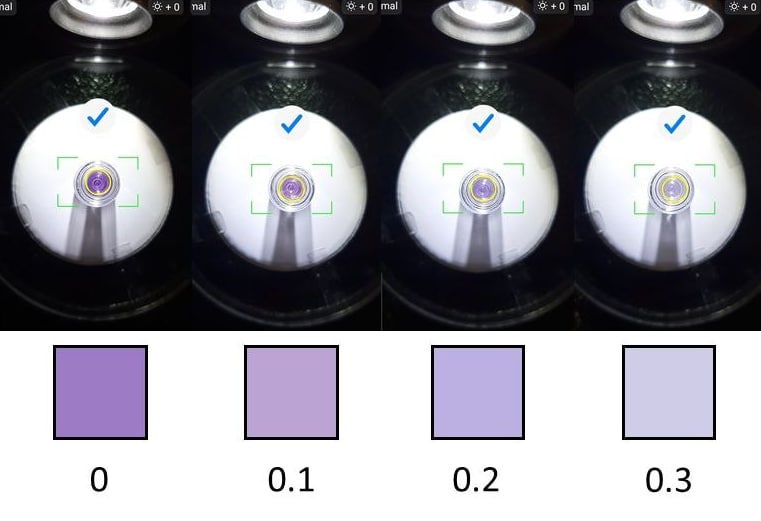
In colorimetry, a photocolorimeter is usually used. Its cost is commensurate with the cost of a smartphone, and the accuracy and sensitivity are higher, Evgeny Alexandrov, PhD, director of the NTI Center for Digital Materials Science: New Materials and Substances at the Bauman Moscow State Technical University, told Izvestia.
— The proposed method could be called more affordable, but it is too complex for domestic use, requires several stages of sample processing and the use of special reagents. However, in terms of portability, this method is not bad, since a smartphone is many times smaller and lighter than a photocolorimeter," the specialist said.
Ion exchange resin, cartridges, and so on are already laboratory activities, not just the work of a smartphone. And how to do this in the field is not entirely clear, said Alexander Vasenev, a developer of educational programs, chairman of the Opora Russia mentoring commission, and an expert at the National Technology Initiative (NTI) Thinking Clubs.
The results of the study are published in the scientific journal Analytica Chimica Acta.
Переведено сервисом «Яндекс Переводчик»
