
Posthumous tales: how scammers use accounts of deceased people

Online fraudsters can use accounts of deceased people to deceive Russians, experts have warned about this. Attackers exploit the accumulated digital reputation of these profiles, and artificial intelligence (AI)-based technologies make deception even more convincing. For details on how cybercriminals use accounts of deceased people, who they are targeting and how dangerous such schemes are, as well as how to protect themselves from them, read the Izvestia article.
What are the accounts of deceased people interesting to scammers?
Accounts of deceased people are attractive to scammers because suspicious activity in them can go unnoticed for a long time, says Alexander Vinokurov, technical account manager at R-Vision, in an interview with Izvestia. If no one is monitoring the profile, the attackers get more time to use it.
— For example, by hacking a page on a social network, fraudsters can gain access to the contact list and start sending messages on behalf of the deceased, — says the specialist. — At the same time, someone you know may not know about what happened and believe a request for help or a money transfer. However, it is no longer possible to contact the account owner and verify the information.
The key value of profiles of deceased people for fraudsters, according to Sergey Polunin, head of the IT infrastructure solutions protection group at Gazinformservice, is the accumulated digital reputation. Unlike the page of a non-existent person created yesterday, the account of a real person has a history of publications, photos, correspondence, reviews and a whole circle of trust.
For a fraudster, this is the best and, most importantly, a ready-made tool for social engineering, the expert notes. And if the account is linked to an e-mail, electronic storage, or some popular digital service, then network scammers break a really big jackpot.

How AI changes schemes with accounts of deceased people
AI technologies are increasingly being used in fraudulent schemes with accounts of deceased people, says Dmitry Zubarev, director of the Analytical Center of the Ural Center for Security Systems (UCSB), an IT company. On the one hand, technology helps attackers find vulnerable profiles: algorithms automatically parse social networks and detect signs of inactivity, as well as find death data from leaks and open sources.
"On the other hand, artificial intelligence turns a captured account into an active digital double: deepfakes are created based on photos and voice recordings, and language models accurately mimic the owner's style," warns Izvestia's interlocutor. — This allows you to scale attacks and address them to those contacts who rarely communicated with a person. For example, to colleagues and classmates, with the expectation that they do not know about his death.

For those who know about what happened, another legend is possible, says Alexander Vurasko, Director of Development at the Solar AURA External Digital Threat Monitoring Center. The account is allegedly used by a relative who collects family support or offers to view memorable photos. The link in such a message may lead to a fake authorization page.
AI makes such appeals cheaper and more convincing, says the expert. If the source materials are available, an attacker can try to reproduce the manner of correspondence, prepare a personalized message, or generate a similar voice. Today, the use of synthesized voices of loved ones to extort money is already a well—known mechanism, and not just a future threat.
"At the same time, the neural network does not gain access to a private archive by itself and does not turn photos into a bank password," Alexander Vurasko clarifies. — Her role in such scenarios is to strengthen social engineering. A familiar voice, a characteristic phrase, or a mention of a family event can make fraudsters' requests more convincing.

What schemes have you encountered with accounts of deceased people before
Meanwhile, online scammers have tried to use the accounts of deceased people for their own purposes before. In particular, according to Dmitry Zubarev, abandoned profiles were used to collect money and send malicious links. And this problem has been encountered in a wide variety of social networks.
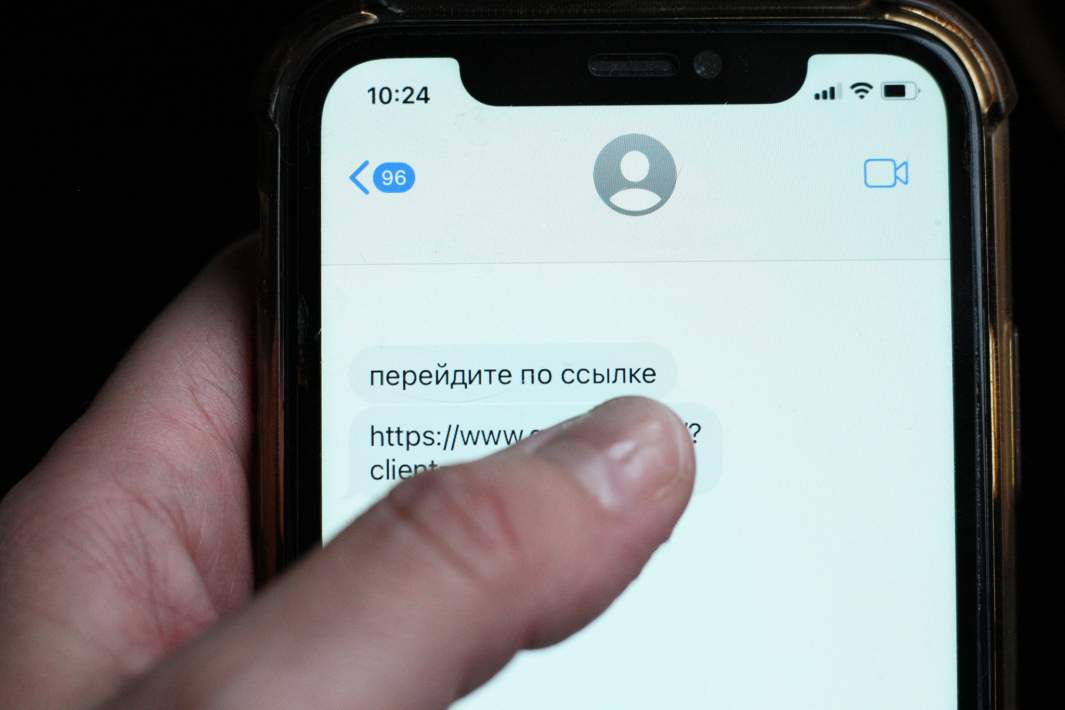
— Such schemes have existed for a long time, but they did not always involve hacking accounts, — says Sergey Polunin. — Often, information from obituaries and memorable publications was simply used for various criminal purposes, from collecting donations to contacting relatives.
At the same time, as the source notes, hacking the account of a deceased person is actually equivalent to capturing a digital identity that no longer exists in the real world, and this is much more attractive to intruders. In some cases, they may try to arrange financial products or conduct other transactions on behalf of the deceased.
First of all, schemes with accounts of the deceased are aimed at people who are not familiar enough with the methods of digital fraud and tend to trust messages from acquaintances, says Alexander Vinokurov. However, older people may also be at risk. With the help of AI, attackers can make deception more convincing: for example, generate a voice or video of a person and try to prove that he is alive, and money is needed for urgent help.
— Then everything depends on the imagination of scammers: they can come up with almost any excuse to transfer funds, — warns the interlocutor of the editorial office. — Therefore, even if the message or call looks reliable, it is important not to make decisions under pressure and independently verify the information.

How to protect yourself from fraud schemes with accounts of deceased people
In order to protect themselves from fraudulent schemes related to the accounts of deceased people, experts interviewed by Izvestia advise following certain security rules. In particular, according to Kaspersky GReAT senior expert Georgy Kucherin, inactive accounts are particularly dangerous: their use allows attackers to make it more difficult to track their actions. Therefore, it is important to close or delete profiles that become obsolete in a timely manner.
— In some platforms, you can also enable account auto—deletion after a long period of inactivity so that it does not have time to fall into the hands of intruders, as well as appoint a "digital heir" who will get access to accounts in case of unforeseen circumstances, - says the expert. — After all, an "abandoned" profile may well become a link in a fraudulent scheme.
In turn, Alexander Vurasko advises against both leaving accounts unattended and hastily deleting the entire family archive in them. First, you need to find out what procedures are provided for by a particular service: saving a memorable page, restricting access, deleting or receiving certain data. At the same time, it is wise to take care of the fate of your own digital data in advance. For existing accounts, unique passwords and two-factor authentication are still important.
If you receive a request for money, a link, or a message from a relative from the deceased's page, you need to check it through another, obviously well-known person, Alexander Vurasko notes. Responding to the same chat and asking, "Is it really you?" is not enough, the scammer will confirm his own cover story. The collection of assistance must be coordinated with the family through an independent channel. A familiar photo and a history of old correspondence do not replace this check. You should not share login codes, bank details, or documents with your interlocutor under the pretext of saving a memorable page.
— Deleting or restricting a real profile will not prevent an attacker from creating a copy of already saved photos. Therefore, the main principle here is twofold: protect the remaining accounts and not consider a familiar name as proof of the authenticity of the message," concludes the Izvestia interlocutor.
Переведено сервисом «Яндекс Переводчик»
